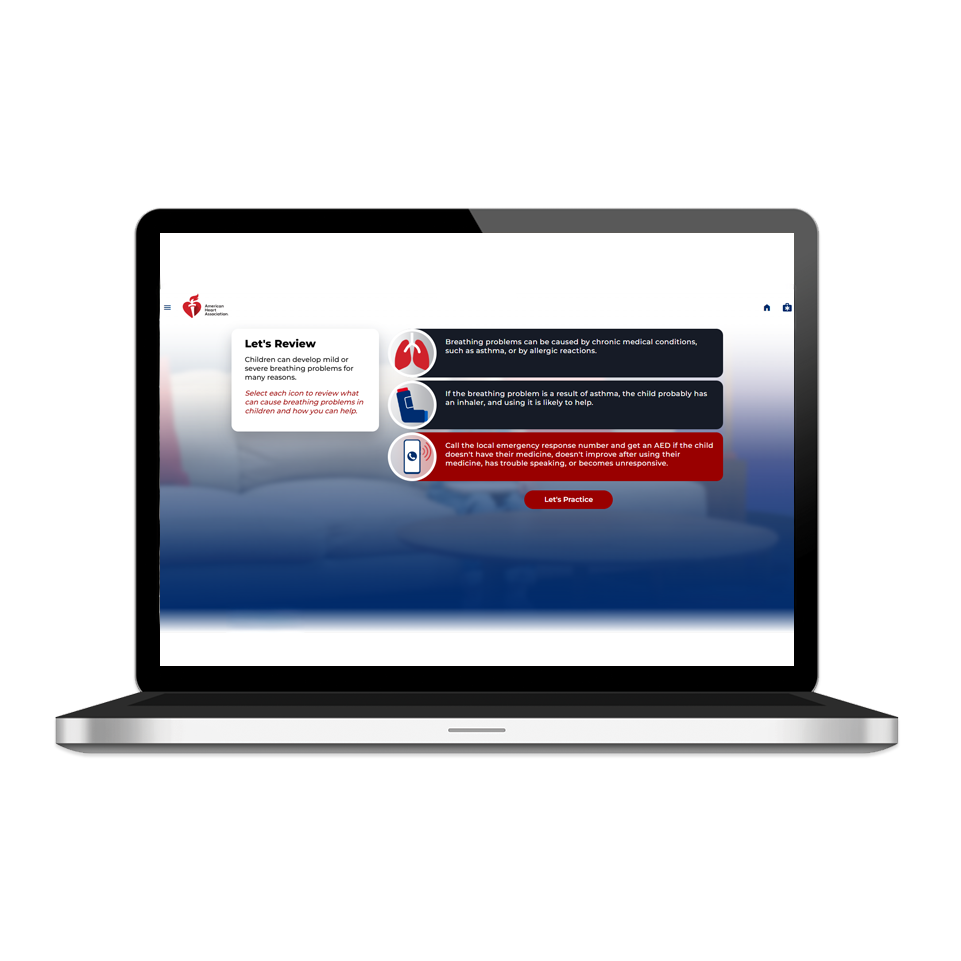
The Heartsaver® for MENA: Pediatric First Aid CPR AED Online (International English) course is taught in a blended learning format. This product is designed for students based in the Middle East and features slight modifications to account for cultural sensitivities. Students must complete the online portion, followed by the hands-on skills session conducted by an American Heart Association International Training Center instructor. Students who successfully complete the online course and skills session (sold separately), will receive a Heartsaver Pediatric First Aid CPR AED Course Completion card, valid for two years. Who should take this course? The AHA’s Heartsaver Pediatric course is designed for anyone with little or no medical training who needs first aid and/or CPR training and a course completion card for job or other requirements. Heartsaver courses can also be taken by anyone who wants to be prepared to act in an emergency. The course is intended for those involved in childcare who have a duty to respond to illnesses and injuries in a child or infant in the first few minutes until professional help arrives. This audience includes childcare workers, teachers, foster care workers, camp counselors, youth organizations, and coaches for children’s sports organizations. This course is also ideal for parents, grandparents, extended family, babysitters, and guardians. Hands-on Skills Session (Sold Separately) A separate hands-on skills session with a Heartsaver or BLS American Heart Association Instructor is required to earn a Heartsaver Pediatric First Aid CPR AED course completion card, valid for two years. What does this course teach? Heartsaver Pediatric First Aid CPR AED Course provides students the highest quality training in the lifesaving skills of first aid, CPR, and how to use an AED with emphasis on emergencies that occur with children and infants. This course completion card should be issued to students who successfully complete all requirements of the Heartsaver First Aid course outside the U.S. that has been updated to reflect the latest science and education from the American Heart Association 2025 Guidelines for Cardiopulmonary Resuscitation and Emergency Cardiovascular Care.